
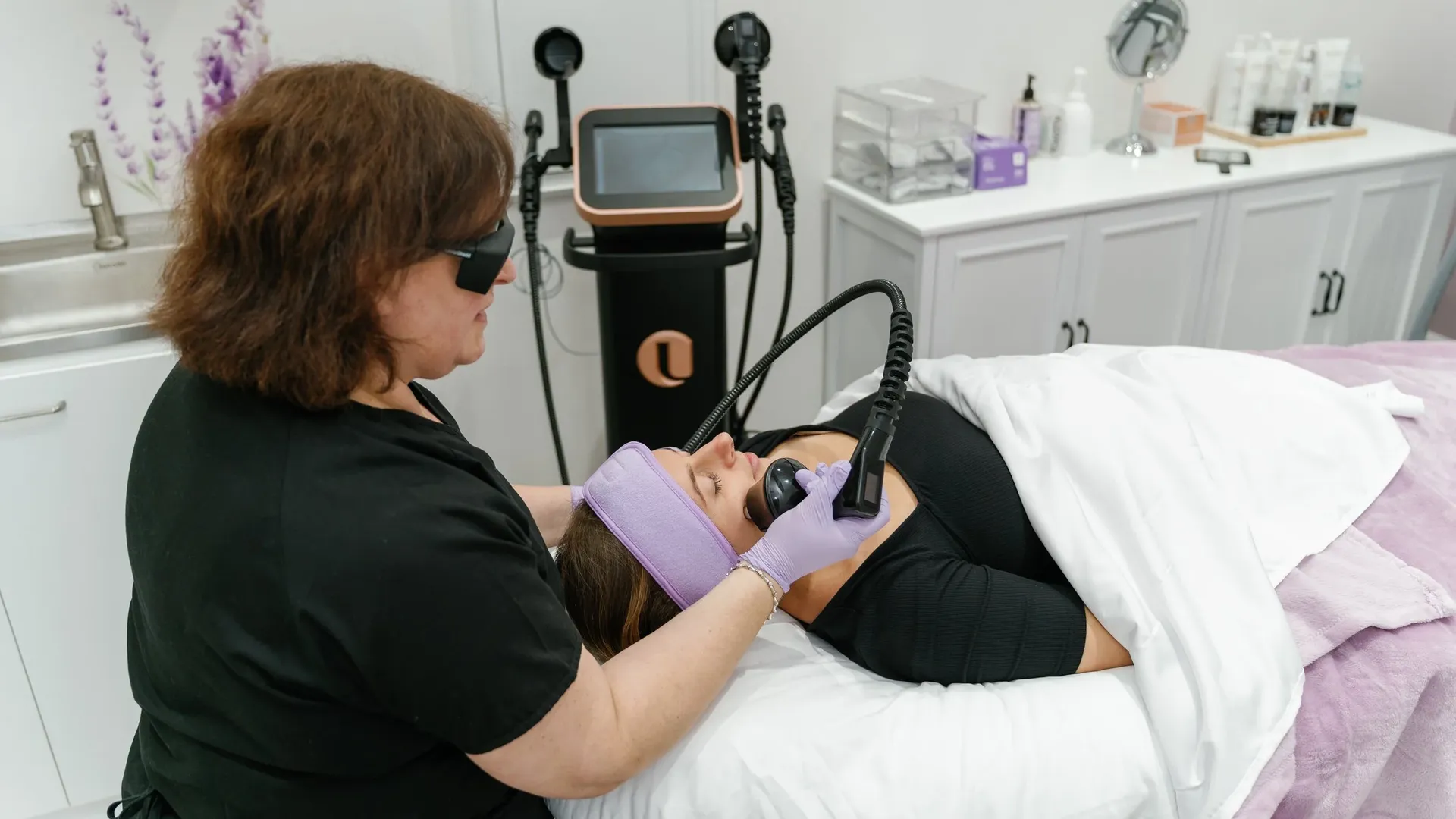
As the face changes with time, one of the most common concerns is not a single line or spot — it is a general shift in contour. Skin that once sat higher along the cheeks and jaw may look softer, heavier, or less defined. For patients at this stage, triLift offers a non-surgical approach that targets three layers of that change simultaneously: muscle, skin, and surface.
triLift combines deep muscle stimulation, radiofrequency energy, and microneedling in a single treatment platform. The result is a plan that addresses facial support, skin firmness, and collagen production in one visit rather than scheduling three separate appointments for related concerns.
How the Three Technologies Work Together
Deep muscle stimulation works below the skin surface, engaging the facial muscles that naturally lose tone with age. Just as the muscles in the body can be conditioned, the facial muscles can be stimulated in a controlled way to support structure and definition along the cheeks, jaw, and neck.
Radiofrequency energy heats the deeper layers of the skin to support collagen remodeling and gradual tightening. Patients often notice the skin feeling firmer and looking more lifted as collagen responds over the weeks following treatment. RF is most effective when the skin has some elasticity to respond; your provider will assess whether the technology is appropriate for your anatomy.
Microneedling at the surface level creates controlled micro-channels that prompt the skin to produce new collagen and elastin. When combined with the deeper work of muscle stimulation and RF, the surface improvements in texture, fine lines, and tone complement the structural changes happening below.
What Concerns triLift Is Used For
triLift is most often considered for patients noticing sagging skin along the jaw and jowl area, loss of definition at the midface and cheeks, a softening neckline, a mild double chin appearance, or fine lines and skin texture concerns across the face. It can also be part of a longer maintenance plan for patients who have had other treatments and want to sustain results without surgery.
It is not a replacement for surgery in patients with significant tissue laxity. A consultation is the right starting point for understanding whether triLift addresses your specific concern, or whether a different approach—or combination of approaches—would serve you better.
What to Expect During Treatment
A triLift session at Lavender Lush Aesthetics begins with a facial assessment and discussion of goals. The treatment is performed with the handheld device moving systematically across treatment zones. Sensations vary by area and setting—patients commonly describe warmth, gentle pressure, and mild muscle contraction.
Some redness and light sensitivity may appear immediately after, particularly from the microneedling component. This usually resolves within a day or two. Most patients are comfortable returning to normal activities quickly, though your provider will give specific aftercare guidance based on the settings used during your visit.
Sessions, Series, and Results
Some patients notice a visible change after the first session. A course of three to five weekly treatments is often recommended for more sustained results, since collagen response and muscle conditioning build progressively. Maintenance appointments help protect the outcome over time.
Results depend on age, skin quality, baseline laxity, and how consistently the recommended plan is followed. triLift is not a one-treatment fix for significant sagging — it is a progressive, non-invasive option that rewards patience and consistency. Combining it with injectable or skin care plans may be discussed if it aligns with your goals.
Planning at Lavender Lush Aesthetics
triLift is offered as part of our Advanced Skin Rejuvenation category in Syosset, NY, with Cherry financing available for eligible patients. Your visit begins with a consultation so your provider can confirm candidacy, explain realistic expectations, and design a plan that fits your timeline and budget — not just the technology.